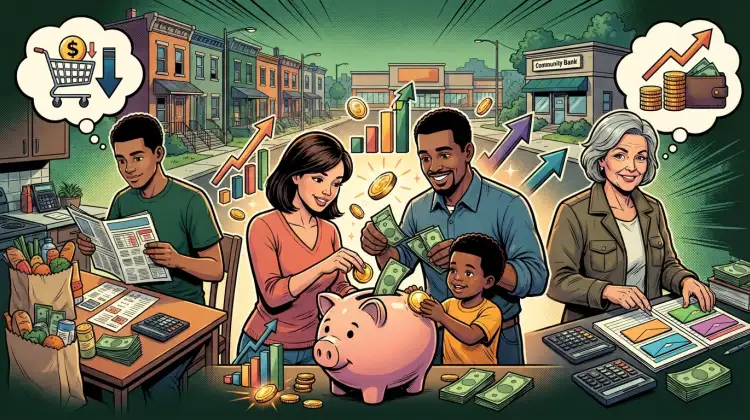
Saving money on a low income is harder than most budgeting advice admits. When rent, groceries, and utilities absorb most of your paycheck, the standard "pay yourself first" rule can feel impossible. But saving is still possible — it just requires a different approach: smaller targets, lower fixed costs, and steady habits rather than big one-time moves. This guide covers realistic tactics for US households, including how to build a starter emergency fund, where to cut recurring expenses, and which federal programs can free up cash.
Start With a Small, Specific Goal
The biggest mistake low-income savers make is aiming for a fully funded emergency fund of three to six months of expenses right away. That target can take years and often leads people to give up. Instead, set a first goal of $500 to $1,000 — enough to cover a car repair, a medical copay, or a short gap in hours at work.
According to the Federal Reserve's Economic Well-Being of U.S. Households report, a large share of adults say they could not cover an unexpected $400 expense with cash. Closing that gap is the most valuable first step. Once you hit $500, the habit tends to stick, and you can raise the target.
- Open a separate high-yield savings account so the money is not sitting in your checking account.
- Automate a transfer of $10 to $25 per paycheck — an amount small enough that you will not miss it.
- Use a savings app that rounds up purchases only if the fees are zero; otherwise, skip it.
Cut Fixed Costs Before Variable Ones
Most savings advice focuses on small daily purchases, but on a low income, the biggest wins come from recurring bills. A $40 monthly phone bill reduction saves $480 a year — far more than skipping coffee. Review these line items annually:
- Housing: If rent consumes more than 30% of income, check whether you qualify for a Housing Choice Voucher through your local public housing agency. Waiting lists are long, so apply early.
- Utilities: Ask your utility about budget billing, which spreads costs evenly across the year, and apply for the Low Income Home Energy Assistance Program (LIHEAP) through your state.
- Phone and internet: The FCC's Lifeline program offers a discount on phone or internet service for qualifying households. The Affordable Connectivity Program ended in 2024, so check current federal and state options before signing a contract.
- Insurance: Compare auto insurance quotes every renewal. Raising a deductible can lower premiums, but only if you have savings to cover the deductible.
Use Benefits You Already Qualify For
Many working households leave money on the table because they assume they earn too much to qualify. Eligibility for programs like SNAP, Medicaid, and the Earned Income Tax Credit (EITC) is based on household size and income, and thresholds are higher than many people expect. In tax year 2024, for example, a single filer with no children could claim the EITC with earned income up to roughly $18,591.
The IRS estimates that roughly one in five eligible workers does not claim the EITC. Filing for it — even if you owe no tax — can return thousands of dollars, which is one of the fastest ways to seed a savings account. Free tax preparation is available through the IRS Volunteer Income Tax Assistance (VITA) program for households earning about $67,000 or less.
Where to check eligibility
- Use Benefits.gov or your state's benefits portal to screen for SNAP, Medicaid, and energy assistance.
- File your taxes through VITA or a free filing service to capture the EITC and Child Tax Credit.
- Ask your employer about an employee assistance program, which sometimes offers emergency grants.
Build a Buffer With Debt and Credit Discipline
High-interest debt is the biggest obstacle to saving on a low income. A credit card balance carrying a 22% annual percentage rate will outpace almost any savings account. Prioritize paying off the highest-rate balance first while making minimum payments on the rest, and contact your issuer to request a lower rate — many will grant one for a good payment history.
At the same time, protect your credit. A damaged score raises the cost of car insurance, deposits, and future loans. Set up autopay for at least the minimum on every account, and keep credit utilization below 30% of your limit. If you need a short-term cushion, a small personal loan from a credit union is usually far cheaper than a payday loan, which can carry an annual percentage rate above 300%.
Make Saving Automatic and Invisible
Willpower is unreliable when money is tight. Remove the decision by automating savings on payday, before you have a chance to spend. Split your direct deposit so a fixed amount lands in savings, or schedule a recurring transfer for the morning after each paycheck.
Pair automation with a simple spending plan. Track your three largest categories — housing, food, and transportation — for one month. You do not need a detailed budget to make progress; you need to know where the money goes. Many banks and credit unions offer free spending summaries that categorize transactions automatically.
What to Remember
Saving on a low income is not about deprivation — it is about lowering fixed costs, claiming benefits you are entitled to, and making deposits automatic so they happen without willpower. Start with a $500 goal, review recurring bills once a year, file your taxes to capture credits like the EITC, and keep high-interest debt from eating your progress. Small, consistent steps compound faster than most people expect.







